Most ideas go nowhere, but there’s only one way to find out.
Author: stripsclubsaresaddiscos
Break 4 Philosophy
Everyone’s lifelong pursuit should be to master the art of self-motivation.
Break 4 Philosophy

Positive Emotions have a higher potency, but Negative Emotions have a longer shelf-life.
The Thurston Howell Gambit

Why aren’t there any new names for chess moves? If you study chess for an afternoon, you will butt up against a plethora of maneuvers named after people like the Smith-Morra Gambit or even after well thought-out concepts like the King’s Indian Attack. Some moves or pieces can even use different languages to represent them like “En Passant” or “Zwischenug”. Like how cool is that? Imagine how smart you’d look dropping down that Zwis-thing on some bozo (even smarter if you can pronounce it). That being said, it would be infinitely cooler to have a contemporary name for a move or piece, but it seems like that well has run dry.
Is it that no one has come up with a keen new strategy to get checkmate, take a piece or gain an advantage? Or is it that all the cool maneuvers are taken? I truly hope it isn’t the latter. I also hope that we haven’t advanced so far in the field of self-aggrandizement that we no longer need to hit a curtain call or two! Have we dug so deep that we’ve reached the other side and all that chess is just another game? Don’t worry my legion of pretentious, snoots, daddy’s home! And I have a brand-spanking-new chess move name! Hold on to your socks you gaggle of insufferable know-it-alls: I want to claim the move where one player gets frustrated and sweeps all the chess pieces off the board. That maneuver will now be called the It’s NotWhat You Know, But Who You Know Defense (also known as the I.N.W.Y.K.B.W.Y.K. Defense – pro bono marketers apply below). OMG! Here comes the egghead society again, “That’s not a real move!” My argument is simple – Chess is supposed to imitate life; it encompasses all the many components that we’ve bottled-up and labelled as Human Nature: loyalty, love, hate, heart-break, sacrifice, strategy, stimulation, desire, error, forgiveness, regret etc. And what is more life-like than a chess move that demonstrates that however much you’ve studied or learned there will always be well-positioned people that can just sweep your well-positioned pieces right onto the floor.
Break 4 Philosophy

The biggest distractions are small achievements.
Declaration of Sentiments
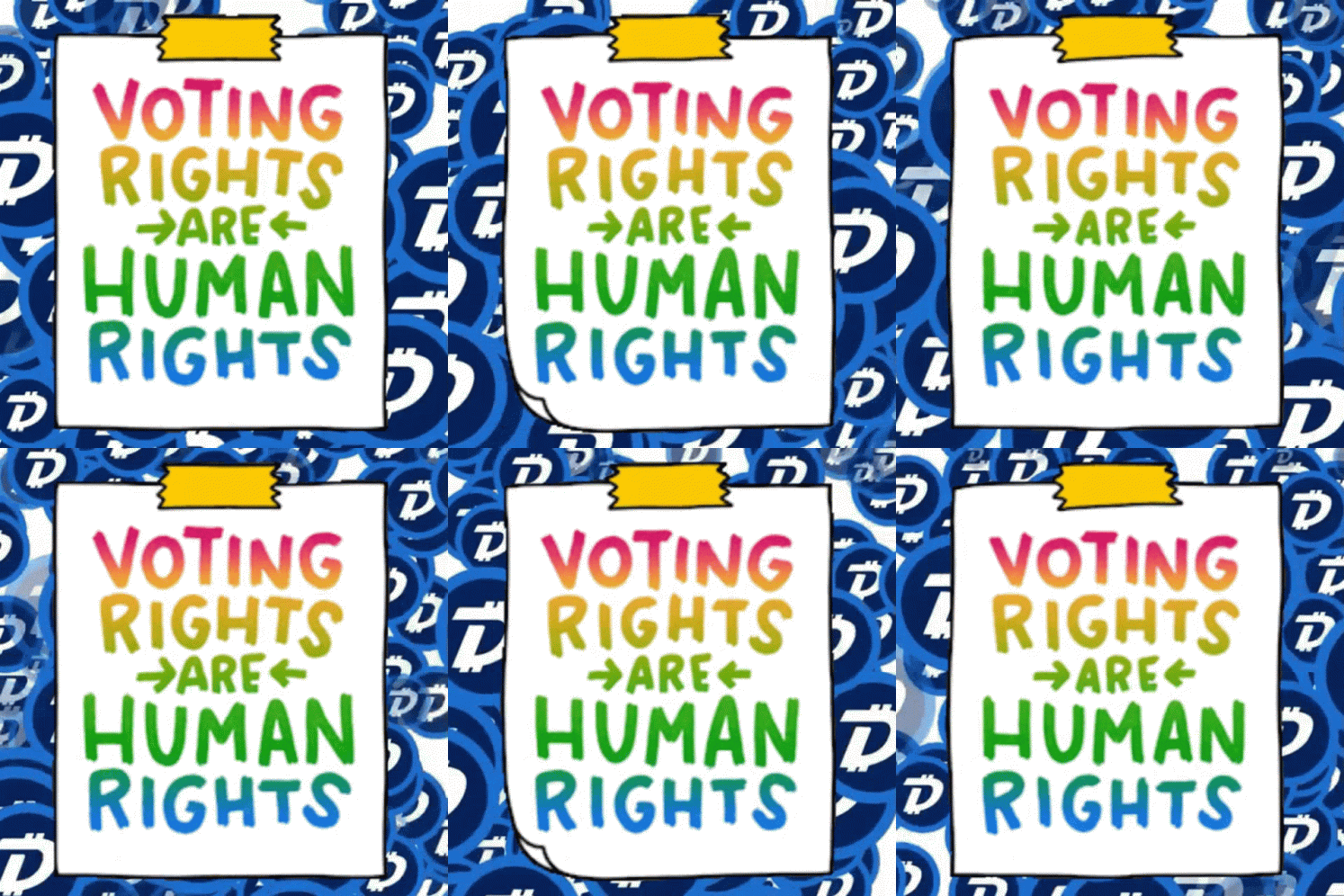
Nearly 175 years ago today, the Seneca Falls Convention was held in New York. With all the current turmoil revolving around voter’s rights (Georgia, Texas and H.R. 1), it seems apropos to look at that moment in time and see how far our democracy has come.
On July 20, 1848, during the Seneca Falls Convention, Elizabeth Cady Stanton read a sort-of state of the union for women including grievances and twelve demands for equality, patterned after the Declaration of Independence called the Declaration of Sentiments. The culmination of this manifesto was twelve resolutions focused on women’s rights. Resolutions regarding equanimity in legal and property rights passed unanimously. Moreover, all of the resolutions that descried an inequality in educational and employment opportunities were also recognized unanimously. In fact, eleven of the twelve resolutions were uncontested and approved in this group of sixty-eight women and thirty-two men. It was only the resolution for women’s suffrage that passed on a simple majority, because it was deemed much too controversial. So during a convention focused on the inequalities facing women, people still believed that giving women the right to vote was a bridge too far. As a matter of fact, upon some criticism and derision directed at the suffrage components, many of the men that signed the Declaration of Sentiments later took their names off.
A lot has changed since then. With the two-party structure, lobbyist-designed gerrymandering, the obsolete electoral college system and the vastness of the voting battle field, it seems that one vote doesn’t mean as much as it did. That being said, the one constant in our democracy seems to be an energy (held by the powers-that-be) to limit voting rights. It seems like even with all the inclusions in our political process contrived to devalue the vote, those in power still seem to hunt for that elusive last bastion of democracy: the vote itself. Since 1848, that singular vote has been attacked by poll taxes, competency tests, segregation, intimidation culture/domestic terrorism, an oppressive patriarchy and that good old-fashioned American wealth disparity. And since 1848, the rich have gotten richer and the governing bodies of this country have maintained a stranglehold on power and resources, while only glacially changing the demographics within that landscape. It seems that the vote will always be under attack for the benefit of the entrenched political class. But maybe I need more faith. Maybe the system needs more time to work on reflecting the powerful diversity stretched across this country. Maybe the ruling class and the bureaucrats that aid them will realize that the people of this country draw strength, resilience and dynamism from our differences and that that is the secret ingredient in winning the future. Or maybe I will be back here for the 200th anniversary of Seneca Falls still waiting for the first female president*.
*Scoreboard: 1 – African-American President, 0 – Female Presidents, 0 – Hispanic/Latin American Presidents, 0 – Openly Gay Presidents, 0 – Asian-American Presidents, 0 – Jewish Presidents …. 0…0…0…0….
Break 4 Philosophy

We communicate to join society as well as to separate ourselves from it.
Break 4 Philosophy
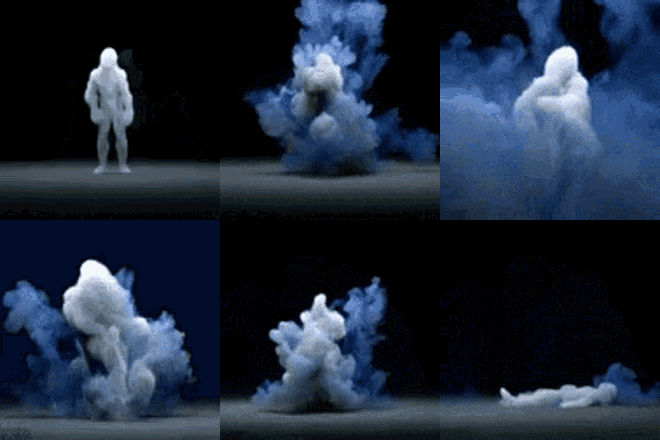
Some people use compliments as social camouflage.
When Humility Fails
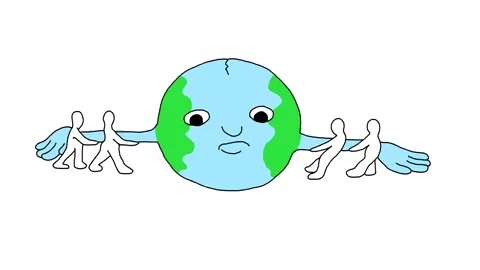
I set-out to consider the state of the Earth as I perceived it. What I wound up doing was thinking about the distress the planet must undoubtedly be in; ultimately, leading to a session of mind-bashing directed towards those that refuse and/or refute Climate Change. Firstly, regard that I don’t pretend to know the scientific data; I solely rely on the reports of scientists as well as some sort of internal, connecting thread of humanity that hazily alerts me that something is wrong. That is hardly proof of the theory of Climate Change and yet I always wind-up disparaging the other side. And since I am entirely too lazy to deep dive into the science and breakdown the numbers and long scientific words, I figured I’d make an attempt at empathy.
After a good 20 minutes of consideration – mixed with the occasional Sudoku forays… I’m a multi-tasker – I came to a conclusion that was both empathic and sympathetic. Perhaps, they have just been failed by humility! Humbleness is almost never wrong. It is immediately an admirable condition based solely on its opposition to arrogance, while also acting as a connection to your fellow person, freeing oneself from the belief of supremacy. Humility helps people join together over our flaws, while giving our fragile egos a rest. Of course, humans can ruin anything…even humility. So, I wondered if Humility in practice could eventually lead you to a sense of comforting helplessness. It’s kind of how if you’ve tripped or slipped and fell in front of a bunch of people (your day is coming if this has yet to happen to you) and instead of getting up right away you just sit there on the basement floor of your embarrassment. Perhaps, those deniers just see the world and the universe beyond their control. How could our actions impact the heavens and the pulse of a planet? Of course, there are political considerations, components of religiosity and a myriad of other factors tethered to this founding concept, but it remains both simple and digestible just like humankind’s best truisms. I cannot disprove this theory either, but I can present a new perspective.
What if our galaxy constituted a living God? Moreover, what if the Sun was its heart and the rest of the planets its organs? And everything else in the galaxy made-up all the many processes, and items within a living form. Perhaps, the Earth could be the brain or some other vital component. If this thought experiment were somehow true, what would one person on Earth be? I would argue that each person is a cell. At that point, if all these premises can be imagined, I would ask how important is a cell? Sure, a cell can die off to no consequence, but it can also choose itself over the organism. The result of that decision would be cancer. And in a world where even humility can fail, I would rather err on the side of caution.
Break 4 Philosophy
The cure is never too far away from the disease.
 Strip Clubs are Sad Discos