

Positive Emotions have a higher potency, but Negative Emotions have a longer shelf-life.
Tag: Food for thought
The Thurston Howell Gambit

Why aren’t there any new names for chess moves? If you study chess for an afternoon, you will butt up against a plethora of maneuvers named after people like the Smith-Morra Gambit or even after well thought-out concepts like the King’s Indian Attack. Some moves or pieces can even use different languages to represent them like “En Passant” or “Zwischenug”. Like how cool is that? Imagine how smart you’d look dropping down that Zwis-thing on some bozo (even smarter if you can pronounce it). That being said, it would be infinitely cooler to have a contemporary name for a move or piece, but it seems like that well has run dry.
Is it that no one has come up with a keen new strategy to get checkmate, take a piece or gain an advantage? Or is it that all the cool maneuvers are taken? I truly hope it isn’t the latter. I also hope that we haven’t advanced so far in the field of self-aggrandizement that we no longer need to hit a curtain call or two! Have we dug so deep that we’ve reached the other side and all that chess is just another game? Don’t worry my legion of pretentious, snoots, daddy’s home! And I have a brand-spanking-new chess move name! Hold on to your socks you gaggle of insufferable know-it-alls: I want to claim the move where one player gets frustrated and sweeps all the chess pieces off the board. That maneuver will now be called the It’s NotWhat You Know, But Who You Know Defense (also known as the I.N.W.Y.K.B.W.Y.K. Defense – pro bono marketers apply below). OMG! Here comes the egghead society again, “That’s not a real move!” My argument is simple – Chess is supposed to imitate life; it encompasses all the many components that we’ve bottled-up and labelled as Human Nature: loyalty, love, hate, heart-break, sacrifice, strategy, stimulation, desire, error, forgiveness, regret etc. And what is more life-like than a chess move that demonstrates that however much you’ve studied or learned there will always be well-positioned people that can just sweep your well-positioned pieces right onto the floor.
Break 4 Philosophy

The biggest distractions are small achievements.
Break 4 Philosophy

We communicate to join society as well as to separate ourselves from it.
Break 4 Philosophy

Some people use compliments as social camouflage.
When Humility Fails
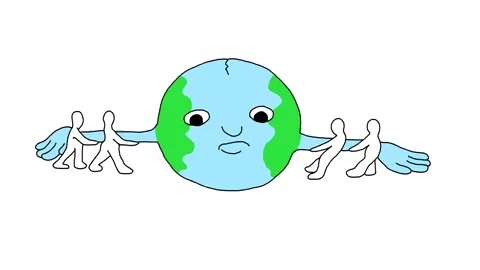
I set-out to consider the state of the Earth as I perceived it. What I wound up doing was thinking about the distress the planet must undoubtedly be in; ultimately, leading to a session of mind-bashing directed towards those that refuse and/or refute Climate Change. Firstly, regard that I don’t pretend to know the scientific data; I solely rely on the reports of scientists as well as some sort of internal, connecting thread of humanity that hazily alerts me that something is wrong. That is hardly proof of the theory of Climate Change and yet I always wind-up disparaging the other side. And since I am entirely too lazy to deep dive into the science and breakdown the numbers and long scientific words, I figured I’d make an attempt at empathy.
After a good 20 minutes of consideration – mixed with the occasional Sudoku forays… I’m a multi-tasker – I came to a conclusion that was both empathic and sympathetic. Perhaps, they have just been failed by humility! Humbleness is almost never wrong. It is immediately an admirable condition based solely on its opposition to arrogance, while also acting as a connection to your fellow person, freeing oneself from the belief of supremacy. Humility helps people join together over our flaws, while giving our fragile egos a rest. Of course, humans can ruin anything…even humility. So, I wondered if Humility in practice could eventually lead you to a sense of comforting helplessness. It’s kind of how if you’ve tripped or slipped and fell in front of a bunch of people (your day is coming if this has yet to happen to you) and instead of getting up right away you just sit there on the basement floor of your embarrassment. Perhaps, those deniers just see the world and the universe beyond their control. How could our actions impact the heavens and the pulse of a planet? Of course, there are political considerations, components of religiosity and a myriad of other factors tethered to this founding concept, but it remains both simple and digestible just like humankind’s best truisms. I cannot disprove this theory either, but I can present a new perspective.
What if our galaxy constituted a living God? Moreover, what if the Sun was its heart and the rest of the planets its organs? And everything else in the galaxy made-up all the many processes, and items within a living form. Perhaps, the Earth could be the brain or some other vital component. If this thought experiment were somehow true, what would one person on Earth be? I would argue that each person is a cell. At that point, if all these premises can be imagined, I would ask how important is a cell? Sure, a cell can die off to no consequence, but it can also choose itself over the organism. The result of that decision would be cancer. And in a world where even humility can fail, I would rather err on the side of caution.
Break 4 Philosophy
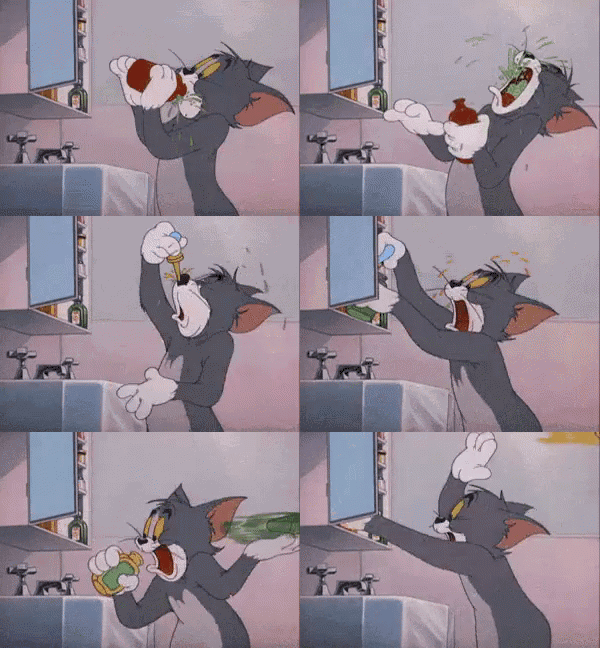
The cure is never too far away from the disease.
Break-Ups Are Hard

This past week, America finally broke-it-off. For twenty years, America hung in there, clinging to the idea of a love in a relationship long dead. With the last embers of passion now extinguished, we can look back at what could’ve been between those star-crossed lovers: United States of America and Afghanistan.
Since 2001, with just cause, America entered into the Afghan war with the intention of rooting out the terrorist responsible for 9/11 and organizing the threat calculus in the Middle East. America’s objectives were laid out efficiently and all of us citizens supported the match, but, unfortunately some complications arose.
The past is the past…at least, that is what the U.S. told itself, ignoring Afghanistan’s messy break-up with Russia and the overall history of the region for being the “graveyard of empires”. As most love-struck individuals believe so America thought, “I can change them. The problem was that no one truly committed; no one really stuck with them!” The plan was intelligence gathering, isolating targets and destroying hot spots, followed by a quick and effective counterinsurgency strategy. Finally, after a year or two of combat operations, the U.S. would be viewed as liberators by the Afghani citizens and nation-building will be spearheaded by the country’s most thoughtful and capable moderates. Once all that was mission accomplished, the U.S. and Afghanistan could build a beautiful relationship. It turned out that history will always and inevitably repeat itself and thanks to covert contact by two of Afghanistan’s exes – Russia and Iran – the budding romance was essentially stunted even before the U.S. would cheat on Afghanistan with what was deemed a sexier prospect: Iraq.
The U.S. gets better headlines elsewhere… About two years into the Afghan War, America inexplicably decided to start something with Iraq. For a time, Afghanistan was left abandoned and confused. Those individuals in Afghanistan that were trained or empowered, or both, were left rudderless and exposed. Worse yet, the country knew they were left high-and-dry for a flashier although less complicated partner. And so, when the dust settled and the two were back together, you could tack resentment onto the list of dysfunctions in this toxic relationship.
Years of co-dependence and dysfunction, but how can we start over… The U.S. and Afghanistan grew apart, but could never truly let each other go. It reached a point that neither could remember a time where they weren’t together and weren’t at odds. On the ground, the bases and airfields that were constructed with hopefulness became only “jumping-off points” for “clean-up” and counterterrorism operations for American soldiers as well as the training Afghan forces – shared custody. It is with those airfields that American troops will depart along with all those Afghanis that wish to abandon the country that they toiled to save and shape. It is with those airfields that America will abandon any projects dedicated to progress or revitalization; moreover, abandoned are all those young women enrolled in college or career for the first time. It is those airfields that will act as a physical reminder of lessons learned and relationships lost as it is inevitably stripped and repurposed to fit the needs of the Taliban and then al-Qaeda.
Break 4 Philosophy

Chit-Chat is like mastering a martial art…it takes years to learn, but when you become truly skilled at it, your hope is to not have to use it.
Words I Love Pt. 18: Contronym

What is there not to love about the word Contronym? It’s usually not in your average dictionary, but hunt around and you’ll find it. It’s a word that means one thing and also means pretty much the opposite. True to form, it’s definition doesn’t truly give you a definitive understanding so here’s an example: Bound means both heading to a destination AND restrained from movement. I know, I know; it gives off an oxymoron vibe, but it’s actually better at being an oxymoron than an oxymoron. Where an oxymoron would say, “By getting on the picket line they were FREEDOM BOUND”, a contronym simply encompasses that contradiction in one word: Bound. It basically did all the heavy lifting for that oxyMORON. Advantage Contronym.
The contronym is more of a concept than just a word. It’s a loadstar in speech, guiding us to one very important understanding: language is both the path and the destination, equally beautiful in its practicality as it is in its futility. Everyday our survival relies on how well we communicate our needs to others, but, at the same time, we can exist just a few poorly chosen words away from our own destruction. You should thank your nearest contronym because it is through it that we can see the dynamic force of language. Language is like light in how it changes into a wave or a particle depending on what is needed to exist.
Ironically, no matter how Language frantically evolves and morphs for its survival and relevancy, it will always be made ineffective by a look or a feeling or a picture. Ultimately, Language itself is a contronym because all the eloquent words in the world cannot define the most underwhelming of sunsets.
 Strip Clubs are Sad Discos